

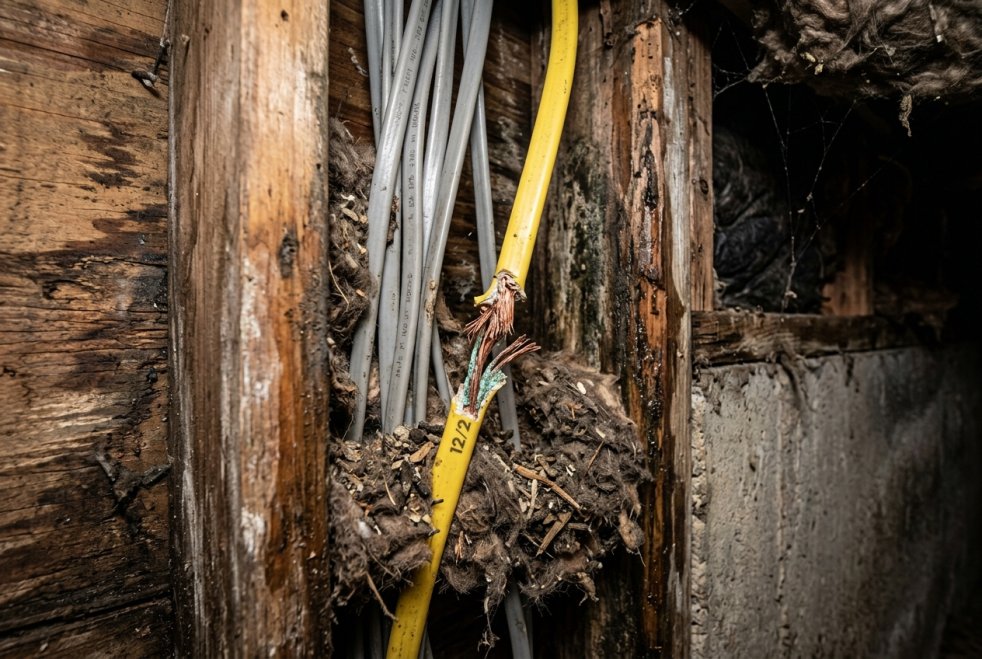
Hidden Winter Damage: What Rodents and Moisture Did to Your Wiring
Spring is finally arriving in Greenwood Village, and while that means warmer temps and melting snow, it also means something less welcome: the discovery of what spent the winter hiding inside your home or business. Rodents seeking warmth and moisture from freeze-thaw cycles can quietly destroy your electrical system between October and March, and most property owners have no idea until something goes wrong.
Why Winter Is Prime Time for Electrical Damage
Colorado winters push mice, voles, and squirrels to seek shelter in tight, warm spaces. Your AC condenser, attic wiring runs, crawl spaces, and wall cavities are exactly what they are looking for. Once inside, they chew through wire insulation to gather nesting material or simply because they gnaw constantly to wear down their teeth.
At the same time, Greenwood Village sees significant freeze-thaw cycling from November through March. That repeated expansion and contraction works moisture into conduit joints, junction boxes, and panel enclosures, corroding connections and weakening insulation from the inside out.
The Most Vulnerable Spots on Your Property
- Outdoor AC condenser units and disconnect boxes, where rodents nest against the motor for warmth
- Attic wiring runs, especially near soffit vents and ridge gaps that give animals easy entry
- Crawl space circuits and vapor barrier areas where ground moisture concentrates
- Garage subpanels and detached structures that see less foot traffic and go uninspected all winter
- Low-voltage wiring for thermostats, doorbells, and security systems, which rodents target frequently
Commercial properties are just as vulnerable. Rooftop HVAC disconnects, parking structure lighting conduit, and mechanical room panels all face the same exposure without the daily visibility a homeowner might have.
Warning Signs You Should Not Ignore This Spring
Some damage announces itself clearly. Other signs are subtle and easy to dismiss as minor quirks. Watch for these red flags as you open up your home or business for the season.
- Breakers that trip without an obvious load cause
- A burning plastic or acrid smell near outlets, panels, or the AC unit when you first run it
- Lights that flicker or dim inconsistently in one area of the home
- GFCI outlets that trip immediately or refuse to reset
- Visible droppings, nesting material, or chewed insulation near your electrical panel or disconnect
- Corrosion or discoloration on outlet faces, breaker terminals, or wire ends
- Your AC unit running but not cooling, which can indicate a chewed low-voltage control wire
Any one of these symptoms deserves a professional inspection. Two or more together is an urgent situation.
The Real Risks of Ignoring the Problem
Chewed wiring is not just an inconvenience. When insulation is stripped away, bare conductors can arc against framing, insulation, or nesting material. Electrical fires often start inside walls or attics where they go undetected for minutes before spreading.
Moisture-corroded connections create resistance that generates heat over time. That heat can degrade wire insulation gradually, long before a breaker trips. In older Greenwood Village homes with aluminum branch wiring, corrosion at connections is especially dangerous and requires specific repair methods.
There is also the equipment cost to consider. Running your AC for the first time with a compromised control circuit or damaged compressor wiring can destroy the unit outright, turning a repair into a full replacement.
What a Professional Electrical Inspection Covers
A qualified electrician will do more than look for obvious chew marks. A thorough spring inspection includes the following.
- Visual inspection of the main panel and any subpanels for corrosion, moisture intrusion, and loose connections
- Testing of all GFCI and AFCI breakers and outlets
- Inspection of accessible attic and crawl space wiring for physical damage
- Review of the AC disconnect, condenser wiring, and low-voltage control circuits before first startup
- Load testing and thermal scanning where warranted
Catching a problem at the inspection stage costs a fraction of what emergency repairs or fire remediation would run.
What to Do Right Now
Before you fire up the AC for the first time this spring, take a walk around your property. Look at the condenser unit for signs of nesting. Check your panel room or utility closet for droppings. Smell around outlets and switches in rooms that were less used over the winter.
If anything looks or smells off, do not wait. The team at Stone Electric serves Greenwood Village and the surrounding Denver metro area with residential and commercial electrical inspections, wiring repair, and panel service. Call (720) 728-1936 to schedule your spring electrical inspection before small problems become expensive ones.
Winter hides a lot. Spring is the time to find it before it finds you.